Choosing the right solar mounting system is an important part of planning a successful photovoltaic (PV) project. While solar panels and inverters often receive the most attention, the mounting structure is responsible for securing the modules, transferring loads to the roof or ground, and maintaining the designed panel position throughout the system's service life.
A suitable PV mounting system needs to match the installation environment, roof or soil conditions, local wind and snow loads, solar module dimensions, and project budget. A mounting solution designed for a metal rooftop may not be suitable for a concrete flat roof or a large utility-scale solar farm. For EPC contractors, installers, distributors, and project developers, understanding these differences before procurement can help avoid installation problems and unnecessary costs.
As a solar mounting structure manufacturer, Landpower Solar provides rooftop, ground-mounted, and solar carport mounting solutions for residential, commercial, and utility-scale PV applications. This guide explains how to evaluate different mounting options and select a structure that fits your project requirements.
Start with the PV Project Installation Environment
The first step in selecting a solar mounting system is identifying where the PV modules will be installed. The installation surface determines the structural configuration, attachment method, foundation requirements, and many of the components needed for the project.
Rooftop solar projects: Residential and commercial buildings commonly use pitched metal roofs, tile roofs, or flat concrete roofs. The mounting structure must match the roof profile and supporting structure while considering waterproofing, roof load capacity, and installation access.
Ground-mounted solar projects: Open land provides more flexibility in panel orientation, row spacing, and system capacity. However, soil conditions, foundation selection, terrain, and local environmental loads become important design factors.
Solar carport projects: Carport mounting structures combine photovoltaic generation with covered parking. Their design needs to account for vehicle clearance, column positioning, parking layout, drainage, and structural stability.
Landpower offers different configurations for these installation environments. Buyers can explore its solar mounting systems and product range to identify suitable structures for their project type.
Choose a Mounting System That Matches the Roof Type
For rooftop PV installations, the roof material and structural design should guide the choice of mounting hardware. Different roof profiles require different attachment methods, and using an unsuitable bracket or clamp can create installation and waterproofing risks.
Metal roof mounting: Trapezoidal, corrugated, and standing seam metal roofs are common in industrial and commercial buildings. Depending on the roof profile, mounting solutions may use mini rails, long rails, hanger bolts, or standing seam clamps. For standing seam roofs, compatible non-penetrating clamps can avoid drilling through the roof sheet.
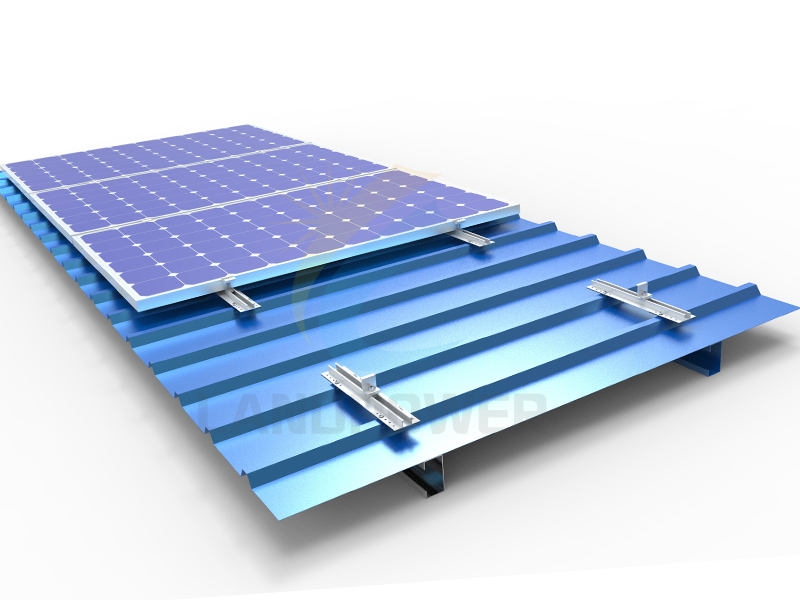
Solar mounting structure for a corrugated metal roof.
For these applications, Landpower provides pitched metal roof mounting systems, including mini rail, corrugated roof, and standing seam solutions. The correct option should be selected according to the actual roof profile, purlin arrangement, and project load requirements.
Tile roof mounting: Tile roofs require mounting brackets that can connect securely to the underlying roof structure without placing excessive pressure on the tiles. Roof hooks and adjustable brackets are commonly used, but their dimensions and installation positions need to match the tile type and supporting rafters.
Flat roof mounting: Flat concrete or low-slope roofs may use ballasted structures, mechanically fixed systems, or adjustable tilt configurations. Ballasted systems can reduce or avoid roof penetrations, but the additional weight must be checked against the roof's load-bearing capacity. Wind uplift, roof membrane protection, drainage, and panel orientation also need to be considered.
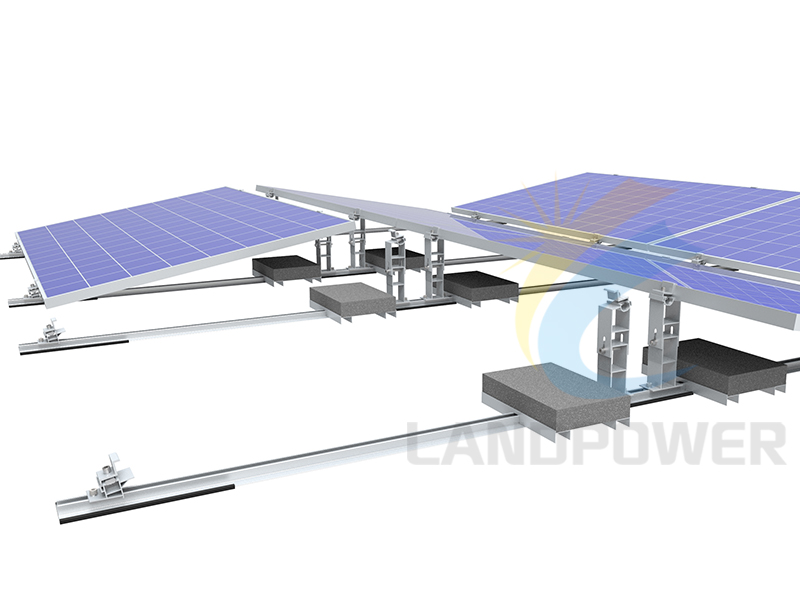
Ballasted solar mounting structure for flat roof applications.
Landpower's flat roof solar mounting systems include landscape, portrait, east-west, and ballasted configurations. These options allow project designers to compare different panel orientations and installation methods according to available roof space and structural conditions.
Ground Mounting or Rooftop Mounting: Which Is Better?
Ground-mounted and rooftop solar systems serve different project conditions. Neither option is universally better. The decision usually depends on available land, roof suitability, system capacity, installation costs, and long-term maintenance requirements.
Rooftop mounting systems make use of existing building space and can be a practical choice for factories, warehouses, commercial buildings, and residential properties. They may reduce the need for additional land, but the building structure must be suitable for the extra loads and installation work.
Ground mounting systems provide greater flexibility in array layout, tilt angle, orientation, and maintenance access. They are commonly considered for utility-scale solar farms and large commercial PV projects. Foundation selection is especially important because soil conditions and terrain directly affect structural design.
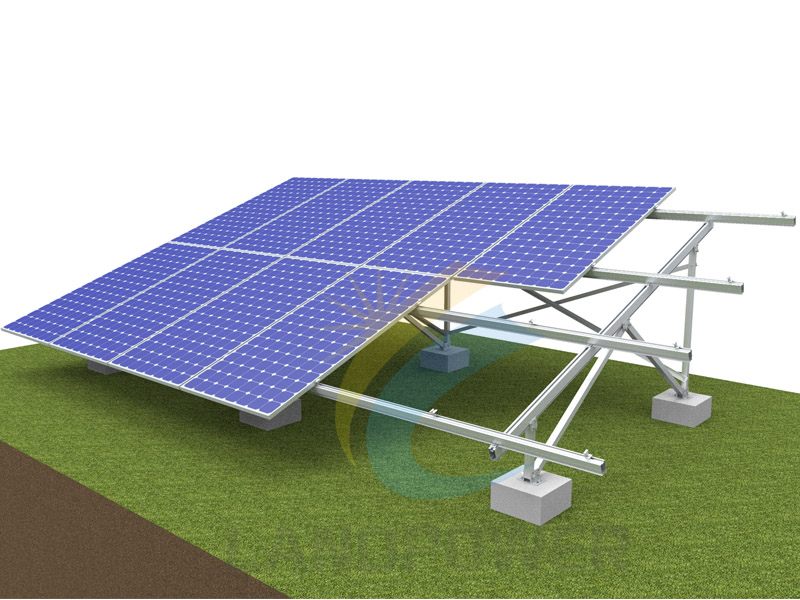
Ground-mounted solar structure for open-area PV projects.
For open-ground installations, Landpower supplies both aluminum and steel mounting structures, with foundation options such as pile-driven and ground screw systems. Explore its ground mounting system solutions to compare configurations for commercial and utility-scale projects.
When evaluating the two options, compare the total project cost rather than only the mounting hardware price. Roof reinforcement, foundation construction, site preparation, installation labor, and maintenance access can all affect the final investment.
Consider Wind Load, Snow Load, and Local Regulations
Environmental loads are among the most important factors in solar mounting system selection. A structure that performs well in a mild climate may require a different configuration in a coastal region, a high-wind area, or a location with heavy snowfall.
Wind load: Wind pressure and uplift forces affect mounting rails, clamps, brackets, posts, connections, and foundations. Building height, terrain category, roof geometry, array position, and local wind speed should be included in the structural design.
Snow load: In regions with significant snowfall, the mounting structure must be designed to withstand the expected snow pressure. Panel tilt, support spacing, rail sections, and structural connections can all influence load distribution.
Corrosion exposure: Coastal and industrial environments may expose mounting structures to salt, moisture, or corrosive substances. Material selection and surface treatment should match the actual environmental conditions.
Local building standards: The design should follow applicable structural codes and project specifications in the installation country. Engineering calculations should verify the load capacity of the complete mounting assembly, including connections and foundations.
For project-specific requirements, Landpower's engineering team can develop customized mounting solutions based on the installation environment and structural conditions. Its steel ground mounting system page also provides an example of how technical parameters, foundation options, and material specifications are presented for a particular product configuration. Published specifications should not be applied to other projects without engineering verification.
Select the Right Material for the Mounting Structure
Aluminum alloy and steel are widely used in solar mounting structures. The right material depends on the structural loads, installation environment, required service life, transportation conditions, and project budget.
Aluminum alloy: Aluminum is lightweight and offers good corrosion resistance, especially when properly anodized. It is commonly used for mounting rails, brackets, and some ground mounting structures. Its lower weight can make transportation and on-site handling easier.
Carbon steel: Steel offers high structural strength and is frequently used for posts, beams, and major support components. Hot-dip galvanizing or other suitable protective coatings can improve corrosion resistance. Steel structures may be suitable for projects that require robust supports and specific foundation configurations.
Stainless steel fasteners: Bolts, nuts, and other connecting components should be selected according to the required strength and corrosion environment. Material compatibility between fasteners and structural members should also be considered to reduce corrosion risks.
Landpower works with aluminum alloy, stainless steel, and galvanized steel components for different PV mounting applications. Its manufacturing and product information describes the use of anodized aluminum and protective steel coatings for corrosion resistance. Buyers can review Landpower's company and manufacturing background when evaluating its material and engineering capabilities.
Check Solar Panel Compatibility and Mounting Components
A solar mounting system must be compatible with the PV modules used in the project. Panel dimensions, frame thickness, module weight, clamping zones, and installation orientation all affect the mounting configuration.
For example, the rail spacing and clamp positions need to follow the module manufacturer's installation instructions. Using an incompatible clamp or placing the clamp outside the permitted zone may affect the module's mechanical performance and warranty conditions.
A complete PV mounting structure may include:
- Mounting rails and structural beams.
- Mid clamps and end clamps.
- Roof hooks, L feet, or roof attachment brackets.
- Ground mounting posts, piles, or ground screws.
- Bolts, nuts, and other fasteners.
- Grounding and bonding accessories.
The components should work together as one structural system. Buyers sourcing mounting hardware in bulk should confirm the compatibility of each component instead of purchasing rails, clamps, and brackets separately without checking their dimensions and connection methods.
For additional information about rails, clamps, and other hardware, visit Landpower's solar mounting system components page.
Evaluate Installation Efficiency and Total Project Cost
The lowest unit price does not always result in the lowest installation cost. A mounting system with fewer components, clear assembly steps, and a suitable level of pre-assembly may reduce on-site labor and help contractors complete projects more efficiently.
When comparing suppliers, consider the following factors:
- Number of components required for each module or mounting table.
- Whether components are pre-assembled before delivery.
- Ease of adjustment and installation on site.
- Packaging efficiency and container loading capacity.
- Availability of replacement parts and technical support.
- Expected maintenance requirements over the project life.
For commercial properties with parking areas, a solar carport may provide an additional use for available space while supporting PV generation. Landpower offers both steel and aluminum carport structures, including options designed for waterproof applications. You can review its solar carport mounting systems for residential and commercial projects.
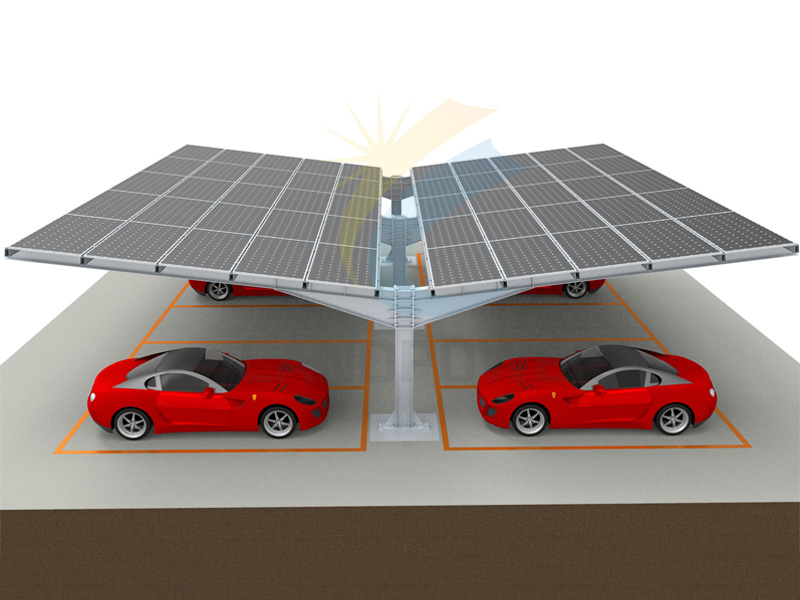
Solar carport structure for commercial parking applications.
When Should You Request a Customized Solar Mounting System?
Standard mounting kits can work well for projects with common roof profiles, module dimensions, and structural conditions. However, some PV installations require adjustments to component dimensions, connection methods, structural materials, or foundation configurations.
Customization may be necessary when:
- The roof profile or supporting structure is different from standard designs.
- The project uses large-format or special-dimension solar modules.
- Local wind or snow loads require a project-specific structural design.
- The installation site has unusual terrain or soil conditions.
- The buyer needs specific rail lengths, bracket dimensions, or connection details.
- The project requires OEM production based on technical drawings.
Landpower provides customized solar mounting solutions and OEM manufacturing according to customer drawings and project requirements. Its engineering team can work with buyers to review the mounting configuration, materials, component dimensions, and installation conditions. For more details, visit Landpower's customized solar mounting systems page.
To help the manufacturer evaluate a project accurately, buyers should prepare the project location, installation type, module datasheet, roof or soil information, wind and snow load requirements, preliminary layout, and estimated order quantity. Drawings and site photographs can also make technical communication more efficient.
Why Work with Landpower Solar for Your PV Project?
Xiamen Landpower Solar Technology Co., Ltd. specializes in the development, manufacturing, and marketing of solar mounting systems and related steel and aluminum products. The company provides mounting solutions for residential, commercial, and utility-scale PV installations.
Its product portfolio covers pitched metal roof mounting, tile roof mounting, flat roof structures, ground mounting systems, solar carports, and mounting accessories. This range allows project buyers to discuss different installation configurations with one manufacturer rather than sourcing every mounting component separately.
Landpower also highlights its OEM steel and aluminum manufacturing experience, project-based engineering support, and quality management system. The company states that its quality management system applies ISO 9001:2015 and that its products have approvals or testing associated with TUV, CE, SPAD, and SGS. Buyers should request the relevant certificates and product-specific documentation when these are required for a project.
For EPC contractors, installers, distributors, and solar project developers, the next step is to match the mounting structure with the actual site conditions and technical requirements. Contact Landpower Solar with your project details to discuss suitable solar mounting configurations, customized components, and quotation requirements.
Frequently Asked Questions About Solar Mounting Systems
How do I choose the right solar mounting system for my PV project?
Start by identifying the installation type, roof or ground conditions, solar module dimensions, local wind and snow loads, and applicable building standards. Then compare the mounting configuration, material, foundation method, installation requirements, and total project cost. A project-specific structural review is recommended before confirming the design.
What is the difference between rooftop and ground-mounted solar systems?
Rooftop solar mounting systems use existing building space and must match the roof structure and material. Ground-mounted systems are installed on open land and offer more flexibility in array layout, tilt angle, and foundation selection. The better option depends on available space, structural conditions, project scale, and installation costs.
Which solar mounting system is suitable for a metal roof?
The suitable system depends on the metal roof profile. Trapezoidal and corrugated roofs may use mini rails, long rails, or compatible roof attachments, while standing seam roofs can use matching seam clamps. The attachment method must be compatible with the roof sheet and supporting structure.
Is an aluminum or steel solar mounting structure better?
Aluminum is lightweight and corrosion-resistant, making it suitable for many rails, brackets, and mounting components. Steel offers high structural strength and is often used for major supports and ground mounting structures. The final choice should consider structural calculations, corrosion exposure, installation conditions, and project cost.
How do wind and snow loads affect solar mounting system selection?
Wind and snow loads influence the required strength of rails, posts, clamps, fasteners, and foundations. The mounting system should be designed according to local design standards and project-specific environmental conditions. Structural calculations should verify the capacity of the complete assembly rather than individual components alone.
Can solar mounting systems be customized according to project drawings?
Yes. Manufacturers can customize rail lengths, bracket dimensions, connection details, materials, and mounting configurations according to technical drawings and project requirements. Landpower provides OEM production and customized solar mounting solutions for different PV applications.
What information should I provide when requesting a solar mounting quotation?
Provide the project location, installation type, solar panel dimensions and weight, roof or soil conditions, wind and snow load requirements, mounting layout, material preferences, and estimated quantity. Technical drawings, module datasheets, and site photographs can help the manufacturer prepare a more accurate proposal.
Selecting the right solar mounting system requires a clear understanding of the project environment, structural requirements, and installation goals. By evaluating roof or ground conditions, environmental loads, materials, component compatibility, and engineering support, PV project owners can make a more informed decision. Landpower Solar offers a range of rooftop, ground-mounted, and carport solutions to support different solar installation requirements.